
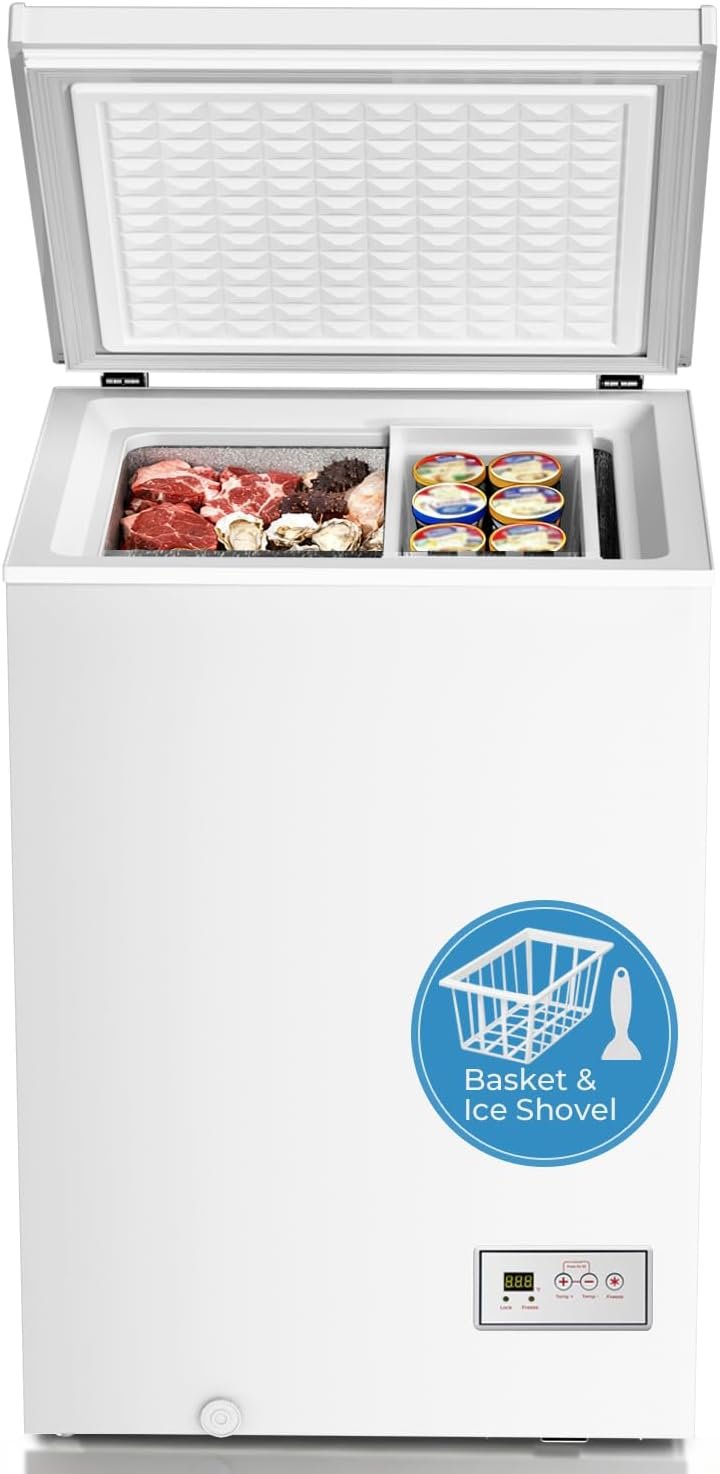
The Importance of Choosing the Right Freezer
Selecting an appropriate freezer is critical for preserving food quality, optimizing storage space, and meeting specific household or commercial needs. Whether you’re managing a home kitchen, storing seasonal produce in a basement, or maintaining a supply for outdoor activities, the right freezer can significantly impact efficiency and convenience. Freezers vary widely in design, capacity, and performance, making it essential to evaluate factors such as storage volume, temperature control, energy efficiency, and noise levels. For example, a chest freezer offers superior insulation and temperature stability for long-term storage, while upright models provide easier access for frequent use. The Antarctic Star Chest Freezer 3.2 Cubic Feet Low-Temperature Freezer is designed to address multiple use cases, offering a balance of capacity, cooling versatility, and energy efficiency. Its ability to maintain temperatures between 14°F and -40°F makes it suitable for preserving fresh food, freezing bulk ingredients, or storing items that require extended cold storage. This review evaluates the freezer’s specifications, customer feedback, and industry-standard performance metrics to help buyers make informed decisions about its suitability for their specific needs.
Quick Overview
| Feature | Details |
|---|---|
| Freezer Type | Chest Freezer |
| Total Capacity | 3.2 Cubic Feet |
| Temperature Range | 14°F to -40°F |
| Cooling Technology | Low-Temperature Freezing |
| Energy Efficiency | 193 kWh Annual Consumption |
| Noise Level | 43 dB |
| Climate Readiness | Garage-Ready |
| Intended Use | Home, Basement, Kitchen |
| Warranty | Not Disclosed |
The Antarctic Star Chest Freezer combines a compact footprint with a broad temperature range, making it ideal for households that require flexible storage options. Its low-noise operation and energy-efficient design are particularly beneficial for placement in garages or basements where ambient noise and power consumption are concerns. The freezer’s ability to maintain temperatures as low as -40°F ensures optimal freezing for preserving food quality, while its adjustable temperature settings allow users to tailor storage conditions to specific ingredients.

Storage Capacity and Internal Organization
The Antarctic Star Chest Freezer’s 3.2 cubic feet capacity is designed to accommodate a variety of frozen and fresh food items, making it suitable for both small households and seasonal storage needs. The freezer’s design includes a removable basket, which enhances organization by allowing users to separate different types of food or ingredients. This feature is particularly useful for storing bulk items such as frozen vegetables, meats, or ice packs, as it prevents cross-contamination and simplifies retrieval. The chest-style construction also provides superior insulation compared to upright freezers, which helps maintain consistent temperatures and reduce energy consumption. However, the relatively small capacity may be limiting for households with high frozen food consumption or those requiring long-term storage of large quantities. The internal layout is straightforward, with minimal shelving and storage compartments, which may not be ideal for users who need more structured organization for specialized items.
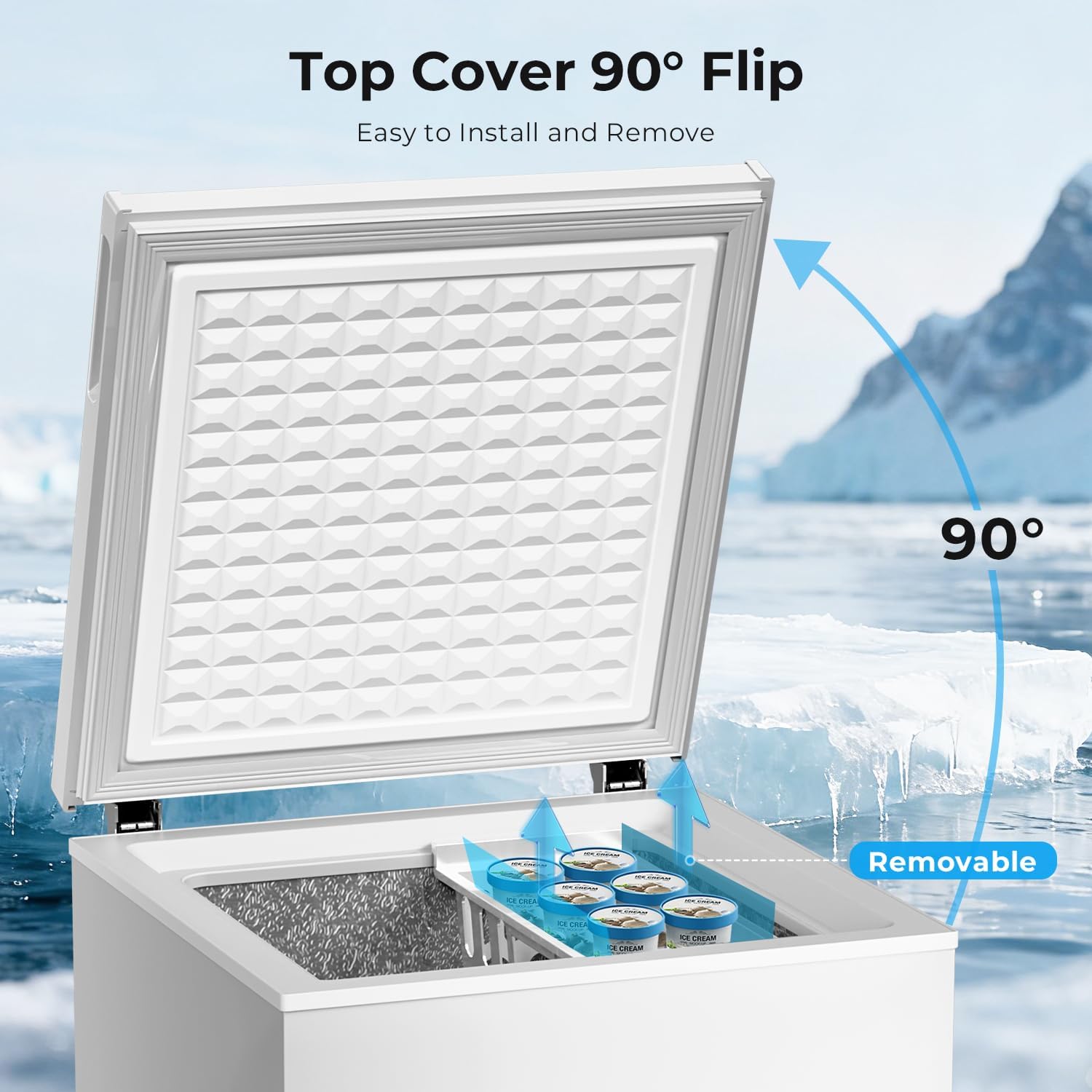
Removable Basket for Enhanced Organization
The removable basket is a standout feature of the Antarctic Star Chest Freezer, offering users the ability to customize storage within the unit. This design allows for easy access to frequently used items while keeping heavier or less frequently accessed items in the lower compartment. The basket’s material is likely to be durable and easy to clean, which is essential for maintaining hygiene in a freezer environment. However, the absence of additional shelving or dividers may limit the freezer’s ability to accommodate highly organized storage for items such as frozen meals, ice cream, or specialty ingredients. The basket’s removal also facilitates thorough cleaning, which is important for preventing odors and maintaining food safety.
Capacity Limitations for High-Volume Users
While the 3.2 cubic feet capacity is adequate for small households or seasonal storage, it may fall short for families with high frozen food consumption or those requiring long-term storage of large quantities. The freezer’s design prioritizes energy efficiency and noise reduction over maximizing internal space, which could be a drawback for users who need more storage capacity. For example, households that frequently freeze bulk items such as frozen dinners, meats, or large quantities of frozen vegetables may find the freezer’s capacity limiting. Additionally, the lack of dedicated compartments for specific items such as ice packs or frozen desserts may require users to rely on the removable basket for organization, which may not be sufficient for more complex storage needs.
Temperature Range and Cooling Consistency
The Antarctic Star Chest Freezer’s ability to maintain temperatures between 14°F and -40°F is a key selling point, as it offers flexibility for different storage requirements. The low-temperature range of -40°F is particularly beneficial for preserving the cellular structure and intrinsic nutrients of ingredients, which can enhance the quality of thawed food. This temperature range is ideal for long-term storage of items such as meats, frozen vegetables, and other perishables that require extended cold storage. However, the freezer’s ability to maintain consistent temperatures at the lower end of the range may depend on factors such as ambient temperature, insulation quality, and the frequency of door openings. Users should also consider that the freezer’s cooling performance may be affected by the type and volume of items stored, as well as the frequency of temperature adjustments.

Temperature Stability for Fresh Food Preservation
Maintaining a consistent temperature is crucial for preserving the freshness and quality of frozen food, and the Antarctic Star Chest Freezer’s temperature range of 14°F to -40°F is designed to support this. The lower temperature range of -40°F ensures that food remains frozen for extended periods, reducing the risk of spoilage and maintaining texture and flavor. This is particularly important for items such as seafood, which can degrade quickly if not stored at the correct temperature. The freezer’s electronic temperature control panel allows users to set and adjust the desired temperature, ensuring that the unit can adapt to different storage needs. However, users should be aware that the freezer’s ability to maintain precise temperatures may be influenced by external factors such as ambient temperature and the frequency of door openings.
Energy Efficiency and Power Requirements
The Antarctic Star Chest Freezer’s energy efficiency is a significant consideration for users looking to minimize electricity consumption. With an annual electricity consumption of 193 kWh, the freezer is designed to operate efficiently while maintaining its low-temperature range. This level of energy efficiency is particularly beneficial for users who store the freezer in environments where power consumption is a concern, such as garages or basements. The freezer’s low-noise operation, which measures at 43 dB, further enhances its suitability for placement in noise-sensitive areas. However, users should be aware that the freezer’s energy efficiency may be affected by factors such as ambient temperature and the frequency of door openings, which can influence the unit’s overall power consumption.
Noise Levels and Placement Suitability
The Antarctic Star Chest Freezer’s noise level of 43 dB is a key factor in determining its suitability for different environments. This low-noise rating makes the freezer ideal for placement in areas where ambient noise is a concern, such as garages, basements, or near living spaces. The chest-style design also contributes to reduced noise levels by minimizing air movement and vibration compared to upright freezers. However, users should be aware that the freezer’s noise level may increase if it is placed in a location with high ambient temperatures or if the unit is frequently opened, which can cause the compressor to work harder. The freezer’s placement should ideally be in a well-ventilated area with stable temperatures to ensure optimal performance and noise reduction.

Garage-Ready Design for Outdoor Storage
The Antarctic Star Chest Freezer is specifically designed for garage-ready use, making it an excellent option for users who need to store frozen food in outdoor environments. The freezer’s insulation and temperature range are engineered to function effectively in varying climate conditions, including potential temperature fluctuations that may occur in a garage setting. However, users should consider the impact of extreme weather conditions on the freezer’s performance, as prolonged exposure to high ambient temperatures may affect the unit’s ability to maintain the desired temperature range. The freezer’s design also includes a top-opening door, which is suitable for garage storage but may be less convenient for users who require frequent access to the contents.
Durability and Long-Term Reliability
The Antarctic Star Chest Freezer’s durability and long-term reliability are critical factors for users seeking a freezer that can withstand regular use and environmental conditions. The freezer’s construction includes a metal door and a robust chassis, which are designed to provide structural integrity and resistance to wear over time. The unit’s electronic temperature control panel and digital display contribute to its reliability by allowing users to monitor and adjust the temperature settings with precision. However, the absence of a warranty or detailed durability information may raise concerns for users who prioritize long-term reliability. The freezer’s performance may also be influenced by factors such as maintenance practices, the frequency of door openings, and the type of items stored, which can impact the unit’s overall lifespan and efficiency.

Maintenance and Longevity Considerations
While the Antarctic Star Chest Freezer is designed for long-term use, its longevity may depend on proper maintenance and usage practices. The unit’s electronic components, including the temperature control panel and digital display, should be kept clean and free from dust to ensure optimal functionality. Users should also be aware that the freezer’s performance may be affected by the accumulation of frost or ice, which can reduce efficiency and increase energy consumption. Regular maintenance, such as defrosting the unit and ensuring proper ventilation, can help extend the freezer’s lifespan and maintain its efficiency. However, the absence of a detailed warranty or maintenance guide may limit the user’s ability to address potential issues over time.

Pros & Cons
Pros
- Adjustable Temperature Range: The freezer’s ability to maintain temperatures between 14°F and -40°F offers flexibility for different storage needs, making it suitable for preserving a wide range of food items.
- Low-Noise Operation: With a noise level of 43 dB, the freezer is ideal for placement in noise-sensitive areas such as garages or basements.
- Energy-Efficient Design: The unit’s annual electricity consumption of 193 kWh makes it a cost-effective option for users concerned about energy use.
- Removable Basket for Organization: The included basket enhances storage flexibility, allowing users to separate and access different food items easily.
- Garage-Ready Construction: The freezer’s design is optimized for outdoor use, making it suitable for storage in garages or other non-traditional environments.
- Digital Temperature Control: The electronic display and adjustable settings provide precise control over storage conditions, ensuring optimal food preservation.
Cons
- Limited Storage Capacity: The 3.2 cubic feet capacity may be insufficient for households with high frozen food consumption or those requiring long-term storage of large quantities.
- Minimal Internal Organization: The lack of dedicated compartments or shelving may make it challenging to store specialized items such as frozen desserts or ice packs.
- No Warranty Information: The absence of a warranty or detailed durability guidance may raise concerns for users prioritizing long-term reliability.
- Potential Temperature Fluctuations: The freezer’s ability to maintain consistent temperatures may be influenced by ambient conditions and frequent door openings, which could affect performance.
- Placement Sensitivity: While suitable for garage use, the freezer may require careful placement to ensure optimal cooling and noise reduction in varying environments.
Final Verdict: Who This Freezer Is Best For (and Who Should Skip It)
The Antarctic Star Chest Freezer is best suited for users who require a compact, energy-efficient freezer with adjustable temperature settings for diverse storage needs. It is particularly ideal for small households, individuals with seasonal storage requirements, and those who need a garage-ready solution for outdoor use. The freezer’s low-noise operation and digital temperature control make it a practical choice for environments where noise and energy efficiency are concerns. However, users with high frozen food consumption, those requiring extensive storage capacity, or those prioritizing long-term durability may find the freezer’s limitations less favorable. Its minimal internal organization and lack of warranty information may also be drawbacks for users seeking more structured storage options or extended support. Overall, the freezer offers a balanced solution for specific use cases but may not be the best fit for all freezer needs in 2026.

Frequently Asked Questions (FAQs)
What is the temperature range of the Antarctic Star Chest Freezer?
The Antarctic Star Chest Freezer operates within a temperature range of 14°F to -40°F, allowing for flexible storage options to preserve food quality and freshness.
How much electricity does the freezer consume annually?
The freezer has an annual electricity consumption of 193 kWh, making it an energy-efficient option for long-term use.
Is the freezer suitable for garage storage?
Yes, the freezer is designed for garage-ready use, with a construction that withstands varying climate conditions and a low-noise operation suitable for outdoor environments.
What is the capacity of the freezer?
The freezer has a total capacity of 3.2 cubic feet, which is ideal for small households or seasonal storage needs.
Does the freezer have a removable basket for organization?
Yes, the freezer includes a removable basket, enhancing storage flexibility by allowing users to separate and access different food items easily.
What is the noise level of the freezer?
The freezer operates at a noise level of 43 dB, making it suitable for placement in noise-sensitive areas such as garages or basements.
Can the temperature be adjusted for different storage needs?
Yes, the freezer features an electronic temperature control panel, allowing users to set and adjust the desired temperature for optimal food preservation.
Is there a warranty for the freezer?
The product does not disclose a warranty, so users should consider this when evaluating long-term reliability and support options.