

Garage-Ready Freezers: Why Placement Matters and What to Look For
A freezer that works fine in your kitchen may fail in your garage — not dramatically, but quietly, through compressor damage, temperature inconsistency, and shortened lifespan. Garage-ready certification exists specifically for environments where ambient temperatures swing outside the range standard freezers are designed for. This guide explains what that certification actually means and how to choose the right unit for an unconditioned space.
Or answer four questions and let the freezer finder narrow the reviews to the ones that fit how you sleep.
Why Standard Freezers Struggle in Garages
Most household freezers are designed to operate in ambient temperatures between roughly 55°F and 90°F. That range covers climate-controlled interiors — kitchens, basements, utility rooms — but not garages in most climates.
Two problems emerge at opposite extremes:
- Too hot: When ambient temperatures exceed 90°F (common in garages during summer, especially in southern states), the compressor works harder to maintain internal temperature. This increases energy consumption and heat stress on the compressor, shortening its working life. In extreme cases, a non-rated unit may not maintain safe 0°F temperatures at all during peak summer heat.
- Too cold: When ambient temperatures drop below 50–55°F (common in northern garages during winter), the compressor thermostat may read the ambient air as “cold enough” and stop running entirely. This allows internal food temperatures to rise to unsafe levels — a particularly counterintuitive failure mode, since the unit appears to be in a cold environment.
The second failure mode surprises most buyers. A standard freezer in a 30°F winter garage may not run at all, leaving food to thaw slowly.
What “Garage-Ready” Actually Means
Garage-ready (sometimes called “garage-rated” or “wide-temperature-range”) freezers use modified thermostat systems and compressor configurations that maintain safe internal temperatures across a wider ambient range — typically 0°F to 110°F or similar.
Key design differences in garage-ready units typically include:
- Modified thermostats that respond to internal food temperature rather than ambient air temperature, preventing the “cold ambient shuts off the compressor” failure
- Higher-rated compressors that can sustain operation and cooling at high ambient temperatures without thermal stress
- Improved insulation around the compressor and interior to buffer against extreme ambient swings
- Lower ambient operating threshold — verified to function correctly at or near freezing ambient temperatures
How to Verify Garage-Ready Rating
Not all products labeled “garage-friendly” or marketed toward garage use carry a verified wide-temperature rating. Look specifically for:
- A stated minimum ambient operating temperature at or below 32°F (0°C)
- A stated maximum ambient operating temperature at or above 100°F (38°C)
- Explicit “garage-ready” designation from the manufacturer in product documentation, not just retailer marketing copy
If the product page only mentions “suitable for garages” without specifying the ambient temperature range, treat that as unverified. Contact the manufacturer or check the installation manual, which typically lists the actual operating range in the specification table.
Chest vs. Upright for Garage Placement
Both chest and upright freezers come in garage-ready configurations, but chest freezers have an inherent advantage in garage environments:
- Cold air does not escape when the lid is opened, reducing temperature recovery workload after access
- Better temperature stability during ambient swings because of their greater internal thermal mass
- Generally more robust build quality in the lower price tiers compared to equivalent upright models
Upright garage-ready freezers are available and work well when organization and access frequency matter — for example, a garage workshop where you need frequent access to clearly labeled items. But if capacity and reliability in an uncontrolled environment are the primary goals, a garage-rated chest freezer is typically the more resilient choice.
Climate Considerations by Region
| Climate Type | Primary Risk | Key Requirement |
|---|---|---|
| Hot and humid (Gulf Coast, Southwest summers) | Compressor overload at peak summer temperatures | Rated to 105°F+ ambient; compressor warranty 5+ years |
| Cold winters (Midwest, Northeast, Mountain West) | Thermostat shutoff in sub-40°F ambient | Rated to 0°F ambient or lower; modified thermostat confirmed |
| Moderate climates (Pacific Coast, Southeast) | Summer peaks exceeding 90°F in non-shaded garages | Rated to 100°F+ ambient recommended as buffer |
| Variable (four-season climates) | Both extremes across the same year | Full garage-ready range: 0°F to 110°F ambient is the safest minimum specification |
Installation Considerations
Beyond the unit itself, garage placement involves installation factors that affect performance and longevity:
- Concrete floors: Place the unit on rubber feet or a drip tray to prevent moisture wicking into the base. Concrete can be cold and damp, and direct contact degrades some compressor housings over time.
- Ventilation clearance: Garage-ready freezers still need adequate airflow around the compressor — typically 2–4 inches on sides and back. In a crowded garage, confirm the unit will have that clearance in its permanent location before purchasing.
- Outlet and circuit: Confirm the outlet is on a dedicated or adequately rated circuit. Freezers sharing circuits with high-draw tools or equipment in a garage can experience voltage fluctuations that stress the compressor over time.
- Sun exposure: A freezer in direct sunlight through a garage window or near a door will work significantly harder. Shade or placement away from direct solar exposure extends compressor life meaningfully in hot climates.
What to Expect to Pay
Garage-ready freezers carry a modest price premium over equivalent non-rated models — typically $30–$80 more for the modified thermostat and compressor system. That premium is a better investment than replacing a failed standard unit after one or two winters of problematic operation.
The price gap narrows at larger capacities, where manufacturers more commonly include garage-ready features as standard. At the compact end of the market, garage-rated units are less common and the selection is narrower.
Garage-Ready Freezer FAQ
What happens if I put a regular freezer in my garage?
In a hot climate, the compressor works harder and may not maintain safe temperatures during peak summer heat. In a cold climate, the thermostat may stop the compressor when ambient air drops below 50°F, allowing internal temperatures to rise to unsafe levels. Both outcomes are possible within a single year in a four-season climate.
Does garage-ready mean the freezer can handle any temperature?
No. Even garage-rated units have lower and upper ambient limits. Verify the specific range the unit is rated for and compare it against your local climate’s realistic extremes. An attached garage in Phoenix needs a higher upper limit than one in Minneapolis, which needs a lower minimum.
Can I use a chest freezer in a garage without garage-ready certification?
Technically yes, but it is not recommended. Non-certified chest freezers are subject to the same thermostat and compressor issues as uprights in extreme ambient temperatures. The top-loading design offers some thermal advantages but does not compensate for a thermostat that is not rated for the temperature range.
How do I tell if my current freezer is garage-ready?
Check the product manual or manufacturer’s website for the stated ambient operating temperature range. If you cannot find a range lower than 50–55°F, it is not garage-rated. “Suitable for garage use” in retailer copy is not the same as a manufacturer-stated temperature specification.
Is an insulated garage enough to use a standard freezer?
It depends. A well-insulated attached garage that stays above 50°F in winter and below 90°F in summer can host a standard freezer safely. But “well-insulated” varies significantly. If you are uncertain about your garage’s temperature range across all seasons, a garage-rated unit is the safer investment.
All 7 garage-ready freezers reviews
Newest first. Consumables, accessories and parts that were once filed here are excluded.
-

Midea MERC07C4BAWW Chest Freezer, 7.0 Cubic Feet Review
The Midea MERC07C4BAWW chest freezer offers 7.0 cubic feet of storage with convertible fridge/freezer modes, garage-ready design, and power outage…
-
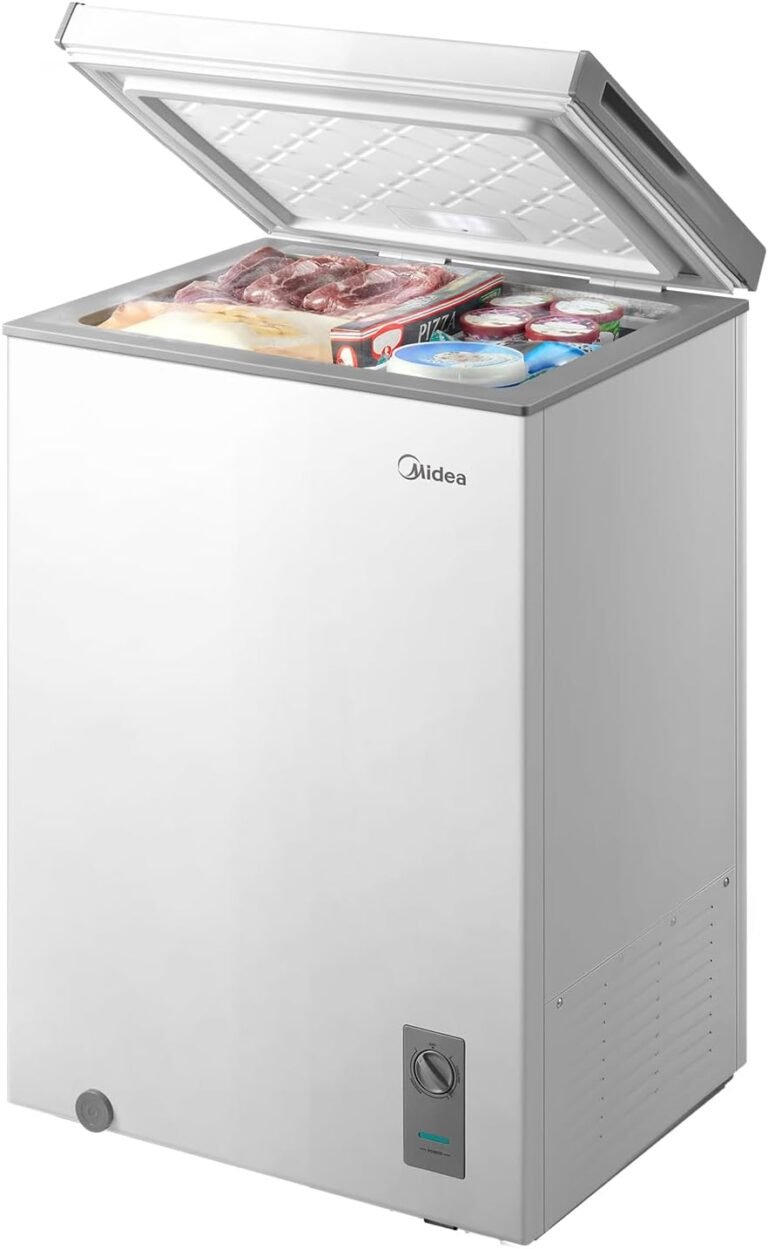
Midea MERC04C4BAWW Chest Freezer, 3.5 Cubic Feet Review
The Midea MERC04C4BAWW chest freezer, 3.5 cubic feet, offers convertible functionality for both freezer and fridge modes, ideal for small spaces and…
-

Kismile 3.2 Cubic Feet Chest Freezer D58 Review: Compact Storage for Home and Office Use
Discover the Kismile 3.2 cubic feet chest freezer D58: compact, energy-efficient, and ideal for small spaces.
-
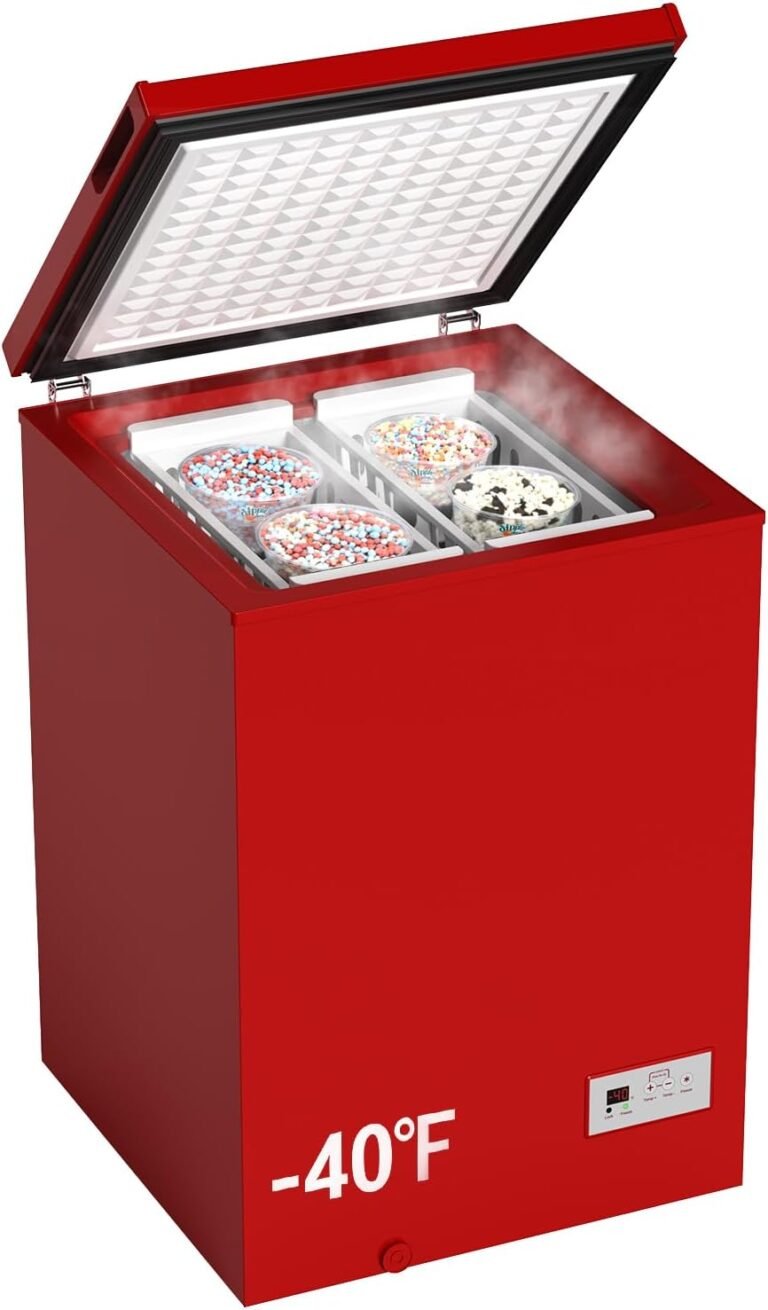
Northair 3.5 Cu Ft Low Temperature Chest Freezer Review
Review of the Northair 3.5 Cu Ft low temperature chest freezer with energy efficiency, storage capacity, and ultra-low freezing features.
-
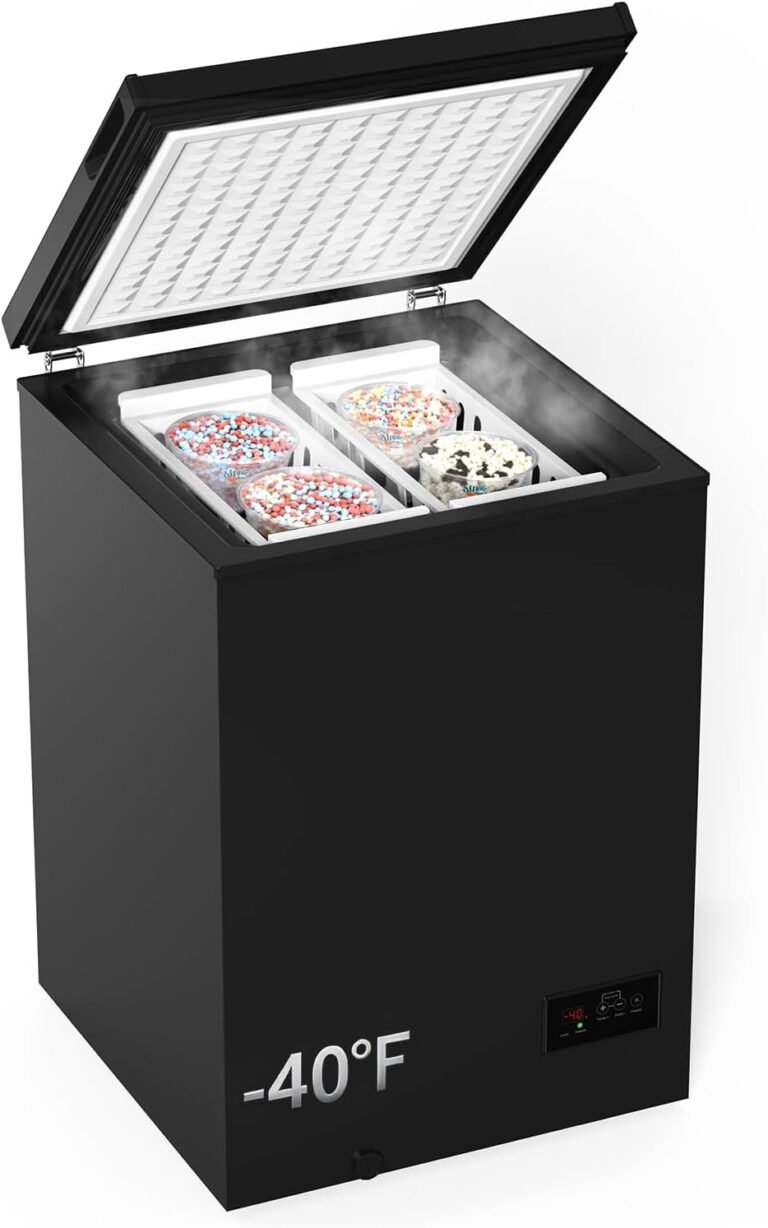
Northair 3.5 Cu Ft Chest Freezer Review: Compact, Quiet, and Energy-Efficient Storage Solution
Explore the Northair 3.5 Cu Ft Chest Freezer review: compact design, energy-efficient operation, and quiet performance for small spaces.
-
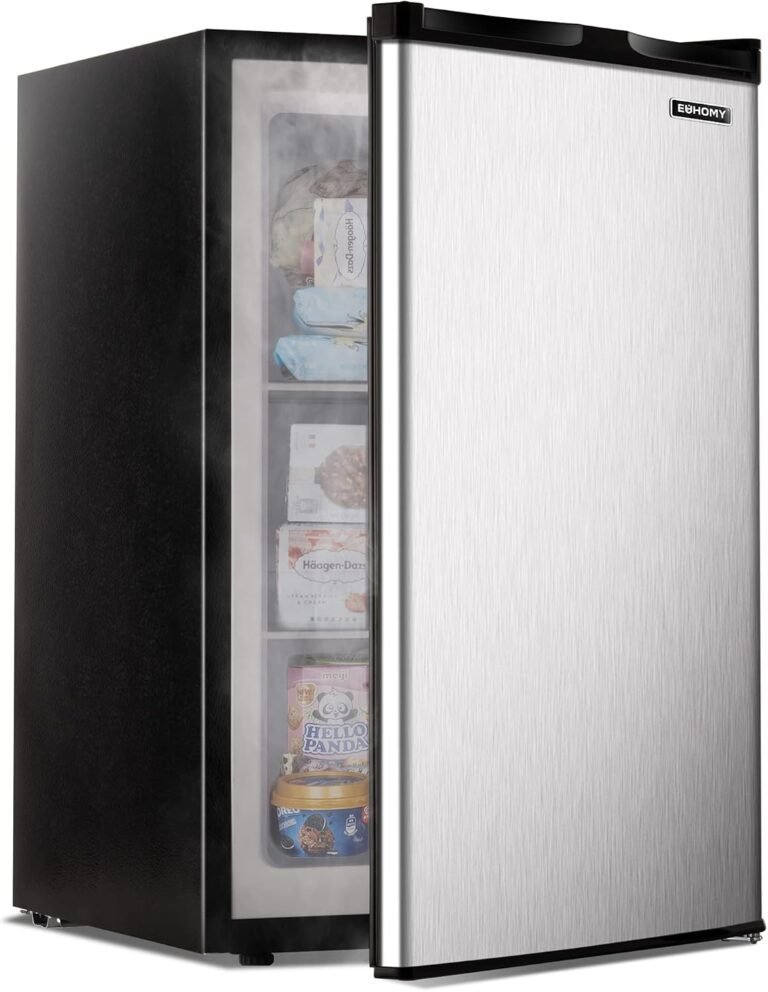
EUHOMY Upright Freezer, 3.0 Cubic Feet Review: Compact Storage for Small Spaces
EUHOMY 3.0 cubic feet upright freezer offers compact storage for dorms, apartments, and offices with reversible door design.
-
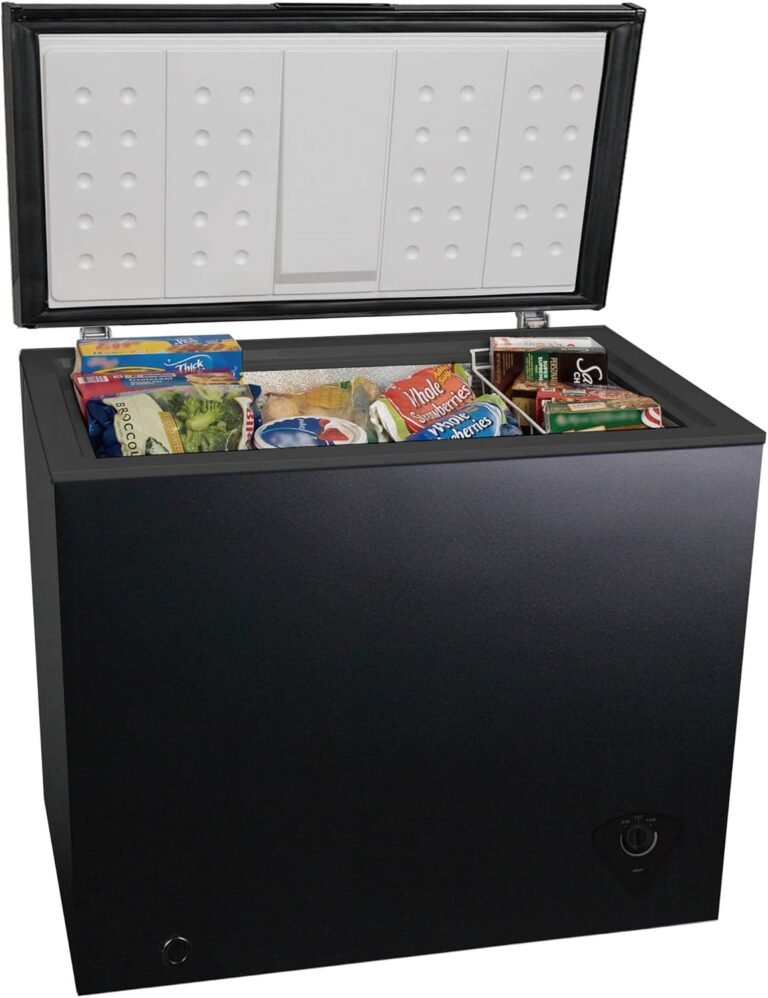
Arctic King ARC070S0ARBB 7 cu ft Chest Freezer Review
Explore the Arctic King ARC070S0ARBB 7 cu ft chest freezer’s energy efficiency, storage capacity, and durability.